


A French studio you’d never heard of twelve months ago just proved that everything the industry believes about game development is fundamentally broken.
Sandfall Interactive‘s Clair Obscur: Expedition 33 sold 3.3 million copies in just 33 days. Not with a thousand-person team. Not with a $300 million budget and a marketing blitz that could fund a small country’s healthcare system. They did it with 30-50 people, most of whom had never shipped a game before in their lives. While Ubisoft laid off hundreds of developers and Sony shuttered studios that had produced critically acclaimed titles, Guillaume Broch was hiring a writer he found on Reddit, a composer discovered on an obscure music forum, and an art director whose only professional experience was designing sets for Cirque du Soleil productions. The creative director who taught himself Unreal Engine in his spare time wasn’t looking for industry veterans or impressive resumes. He was hunting for something much rarer: passion and raw talent united behind a singular creative vision.
The result? A once in a generation experience so compelling that the team still plays it months after launch, not because they have to test patches or create DLC, but because they genuinely love what they created together. Try asking the developers of Skull and Bones how often they fire up their multi-million dollar passion project for fun.

When Corporate Safety Becomes Financial Suicide
For the first time in gaming history, independent games captured 48% of Steam’s total revenue in 2024, representing a staggering $4 billion in revenue for indie titles, which itself represents an 82% year-over-year explosion while traditional AAA releases crawled forward with modest gains.
This isn’t just another feel-good indie success story. This is data-driven proof that the corporate approach to game development, the committees, the focus groups, the metrics-driven design philosophy that prioritizes engagement over enjoyment isn’t just creatively bankrupt. It’s becoming financially obsolete. AAA development costs have exploded from $50-150 million in 2018 to over $200 million as the standard for 2024-2025 releases. Meanwhile, the success rate continues to plummet. When your average game needs to sell 5-6 million copies just to break even, you’ve built a system that crushes the very creativity it depends on. Concord, Sony’s hero shooter backed by a reportedly $300-400 million investment, lasted exactly two weeks before being pulled from stores. Skull and Bones, Ubisoft’s pirate adventure that allegedly burned through an estimated $200-850 million over a decade of development, and couldn’t muster enough soul to justify its existence.
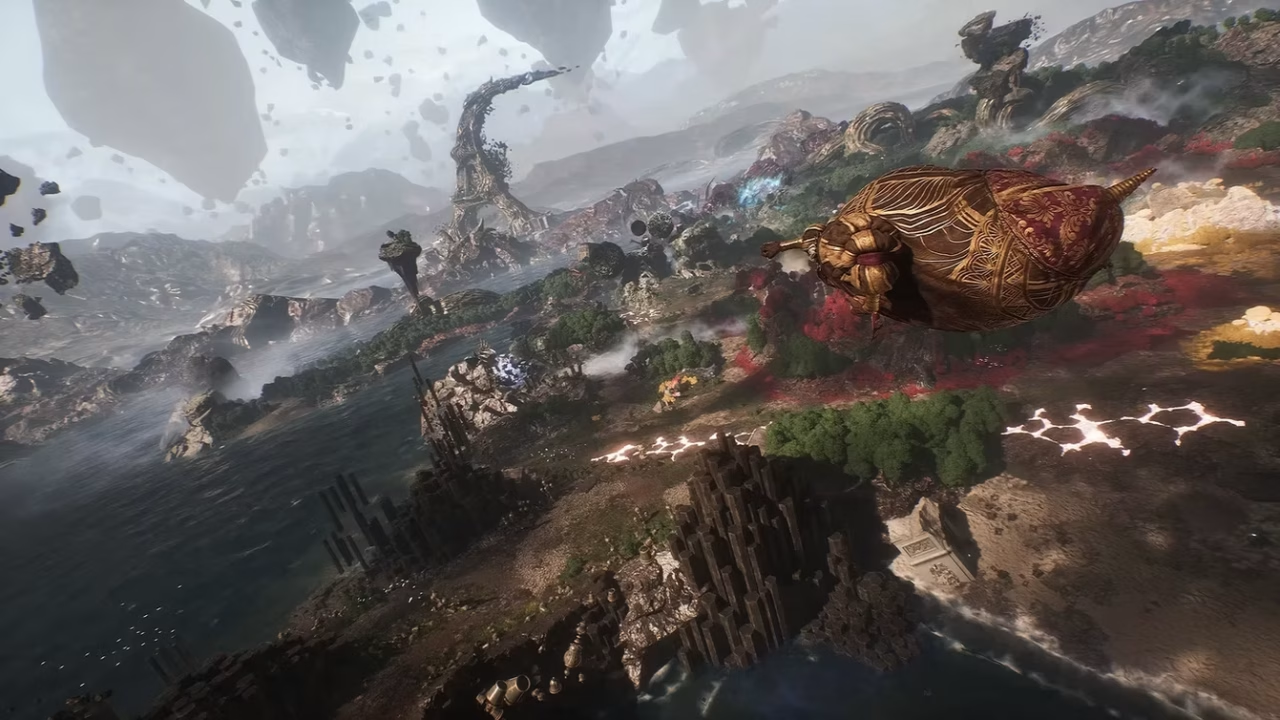

These failures are symptoms of a development philosophy that has lost all connection to what players actually want.
The Expedition 33 Blueprint
Guillaume Broch didn’t just stumble onto a revolutionary hiring philosophy. He cracked the code that every creative industry desperately needs but refuses to acknowledge. When Sandfall needed a writer, they didn’t scour LinkedIn for AAA experience. They found Jennifer Swedberg-Yen on Reddit, responding to a post for free voice actors. She’d never published anything professionally, but she had something no resume could capture – an unstoppable need to tell stories. When they needed a composer, they didn’t contact established studios. Lorien Testard was discovered on a tiny indie music forum, creating fan tracks for game trailers because he couldn’t stop himself from making music. He’d never had anything published, but his eight hours of Expedition 33 music now tops streaming charts worldwide. To outsiders, it looked reckless. In reality, it was pattern recognition: talent over titles, passion over portfolios. Guillaume wasn’t looking for people who could check corporate HR boxes. He hunted for individuals demonstrating raw ability, entrepreneurial spirit, and genuine passion for their craft.
I’ve lived this truth myself. Years ago, while working as an art director at a small marketing agency, I spent nights teaching myself 3D modeling and VR development. These were skills completely outside my print design background. When a client needed a VR game for their conference, I pitched it despite having zero professional VR experience. We pulled it off. The agency eventually folded, but I threw that outlier project in my portfolio anyway. Months later, a recruiter called about a presentation design role. The hiring manager wasn’t looking for another PowerPoint jockey. He wanted someone with VR experience and, more importantly, an insatiable desire to learn. My boss later admitted I didn’t check all the traditional boxes. But that passion project, that willingness to expand beyond comfortable boundaries? That’s what opened the door. Today I manage my own team of creators at that same company.
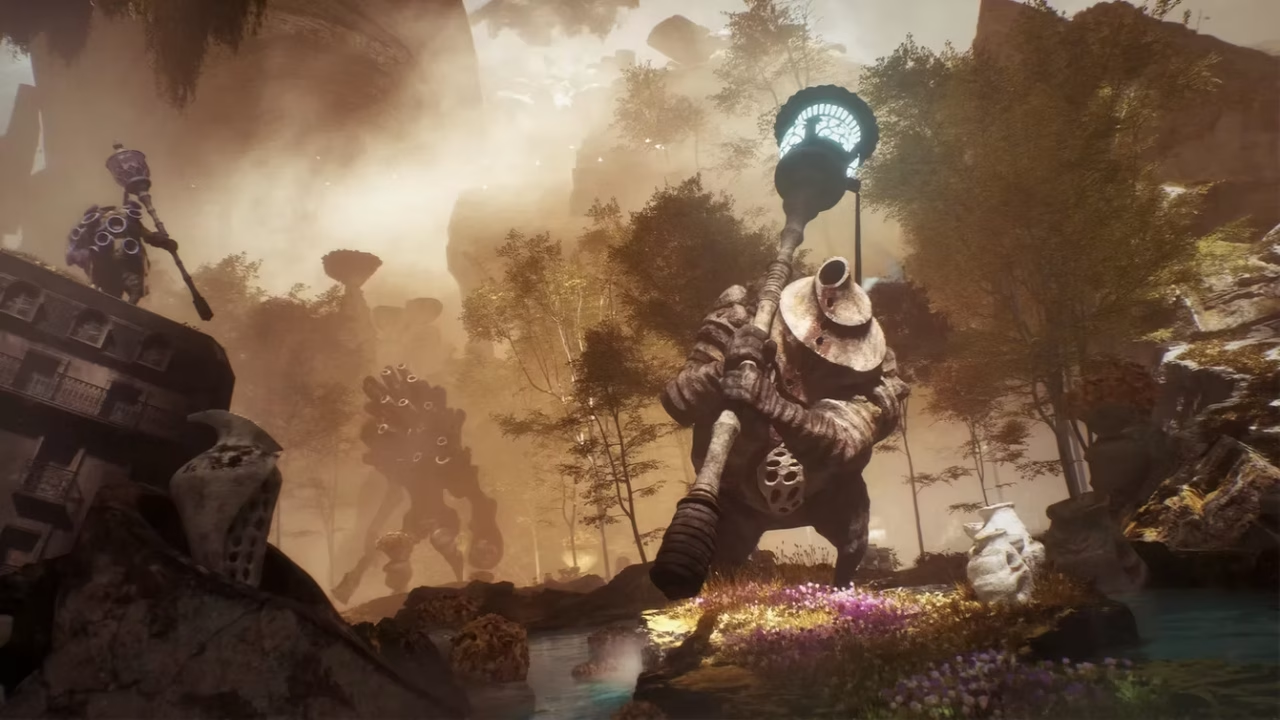

This is exactly what Guillaume understood: the person teaching themselves Unreal Engine at 2 AM, the writer crafting stories no one’s asked for, the composer creating music for games that don’t exist. These people possess something no resume can capture. They have the drive to manifest their vision into reality. Technology became their force multiplier. Unreal Engine 5’s accessibility allowed this small team to achieve visual fidelity that would’ve required hundreds of artists five years ago. Facial capture happened on iPhones. Motion capture was handled by a part-time Korean animation team working as a side hustle.
The Corporate Counterargument (And Why It’s Missing the Point)
To be fair, corporate development isn’t inherently evil. Games like Baldur’s Gate 3 and Elden Ring prove that large, well-funded teams can create masterpieces. Larian Studios grew to 450 employees and reportedly invested over $100 million in Baldur’s Gate 3, achieving both critical acclaim and commercial success. FromSoftware’s 300-person team delivered Elden Ring, which sold over 30 million copies.
There is a crucial distinction here: these successes came from studios that maintained creative autonomy despite their size. Larian remained independent, with founders retaining control. FromSoftware operates with unusual creative freedom within their corporate structure. When corporate oversight increases, creativity dies.
The history of acquisitions repeatedly illustrates this story. BioWare once stood as the gold standard for RPG development. They created universes that still live in our hearts. Mass Effect, Dragon Age, Knights of the Old Republic. These weren’t just games, they were emotional experiences that changed how we saw ourselves and each other. These are games that I, like millions of others, still carry in my heart, knowing we’ll likely never see these worlds recapture the magic that made them unforgettable. Then EA acquired them in 2007, and the slow strangulation began. By the time Anthem launched as a confused, soulless looter shooter, the transformation was complete. Microsoft’s 2024 closure of four Bethesda studios, including Arkane Austin despite their critically acclaimed work, proves that even success provides no protection from corporate restructuring. The Chinese Room’s extraordinary 2025 buyback from Tencent, a desperate move to “safeguard creative freedom”, shows how far studios will go to escape the corporate stranglehold.
The Path Forward
Alternative publishing models offer some hope. Kepler Interactive represents a radical departure from traditional publisher relationships. Instead of the typical predator-prey dynamic, Kepler operates on a co-ownership model giving studios equity stakes and decision-making authority. Developers are treated as trusted partners with genuine influence over their creative destinies. Expedition 33‘s success under this model isn’t coincidental. Sandfall retained creative control while gaining access to funding, marketing expertise, and distribution channels. They didn’t sacrifice vision for resources, and the results speak volumes: an estimated $158-213 million in revenue from a team of 30-50 people represents returns that would make any traditional publisher weep.
But perhaps the most powerful proof that passion-driven development can sustain itself comes from Hello Games. After No Man’s Sky‘s catastrophic 2016 launch, most studios would’ve cut their losses. Corporate wisdom would’ve demanded skeleton crew support, maybe a few patches, then abandonment. Instead, this small team doubled down on their original vision. Nearly a decade later, they’re still releasing massive free updates. No microtransactions. No paid DLC. No season passes or battle royalties. Every person who buys No Man’s Sky gets every update ever released, a radical rejection of the industry’s extractive monetization playbook. Each major update brings new players, driving fresh sales that fund the next wave of content. They’ve built one of gaming’s most wholesome communities by simply respecting their players.
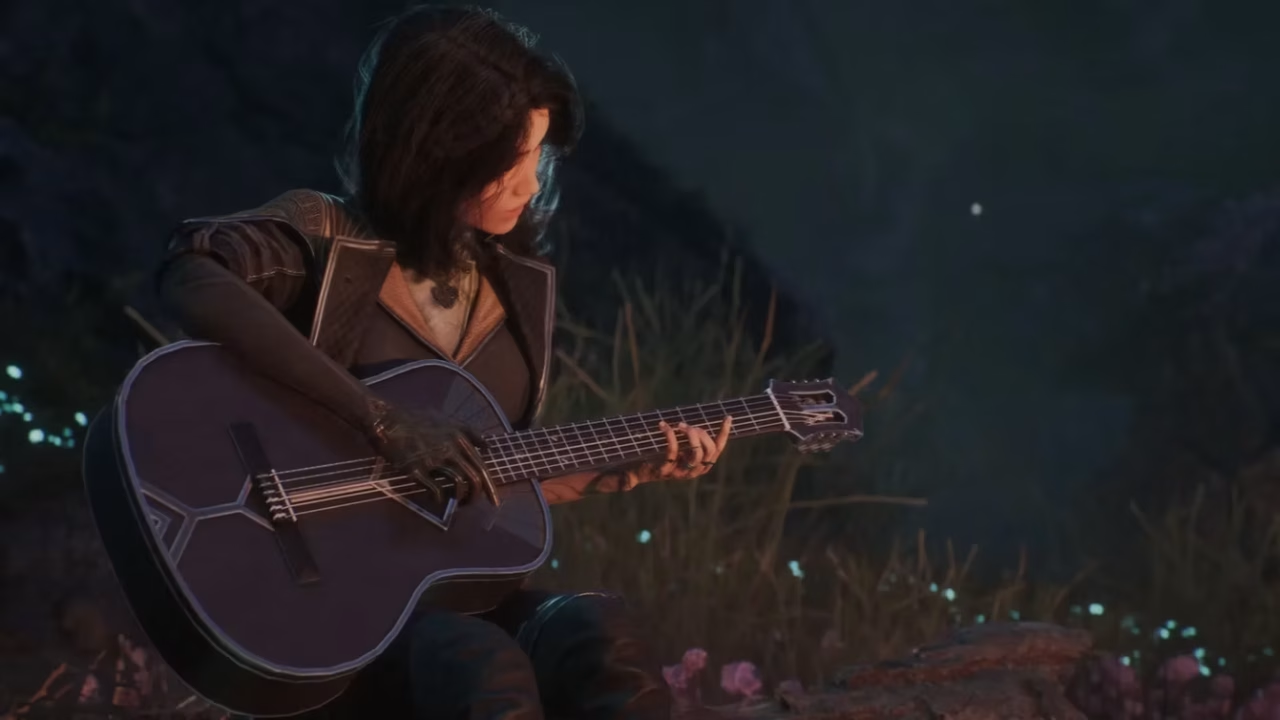
This directly contradicts every corporate excuse about “unsustainable” development. Publishers insist microtransactions and endless DLC are necessary for post-launch support. Hello Games proves that’s a lie. What’s actually necessary is passion, dedication, and treating your players as partners rather than wallets to be emptied.
Trusting the Talent
The transformation happening in game development mirrors broader shifts across creative industries. In every field, authentic work stemming from genuine passion consistently outperforms focus-grouped, committee-driven alternatives. Netflix gave a Korean creator autonomy, and we got Squid Game. Andy Weir self-published The Martian. Instagram had 13 employees when Facebook bought it for $1 billion. As technology democratizes creative tools, the advantages once held by large corporations (distribution channels, production resources, marketing reach) become available to anyone with determination and skill. This isn’t just changing how games get made; it’s fundamentally altering the relationship between creativity and commerce.
Clair Obscur: Expedition 33 represents so much more than an individual success story. It’s proof that there’s another way forward. Guillaume Broch’s decision to hire for passion over pedigree, to protect creative vision over market research, and to trust talented people rather than manage them through committee oversight has delivered an absolute masterpiece that exposes everything broken about corporate game development.
The passionate creators have already chosen their path. They’re out there right now, teaching themselves new engines at 2 AM, crafting stories no one may ever see, composing music for games that don’t yet exist. They might never find an audience. But in this moment, creating something genuine and personal, they’re exactly where they need to be. They’re the ones who understand that great games don’t come from market research or focus groups, but from that spark of human creativity that can’t be quantified or corporatized.
Great games are leaps of faith. Now we’re seeing what happens when that faith is rewarded.